
3 Signs it Could Be Time for Water Heater Replacement
Valentine’s Day is about showing love and appreciation for a significant other, celebrating and nurturing the relationship they’ve shared - whether it’s been for a few months, a few decades, or anywhere in between. But, of course, not all relationships work out that way - such as the relationship between homeowners and their old rust bucket of a water heater.
Maybe they’ve had plenty of good times together, and the old appliance has been of excellent service for many years. But when an aging water heater starts acting up and causing trouble, it may be time to say a bittersweet goodbye and move on to a new and improved model. Homeowners can read on to learn three signs a water heater may need replacing.
Corrosion in the Hot Water Tank
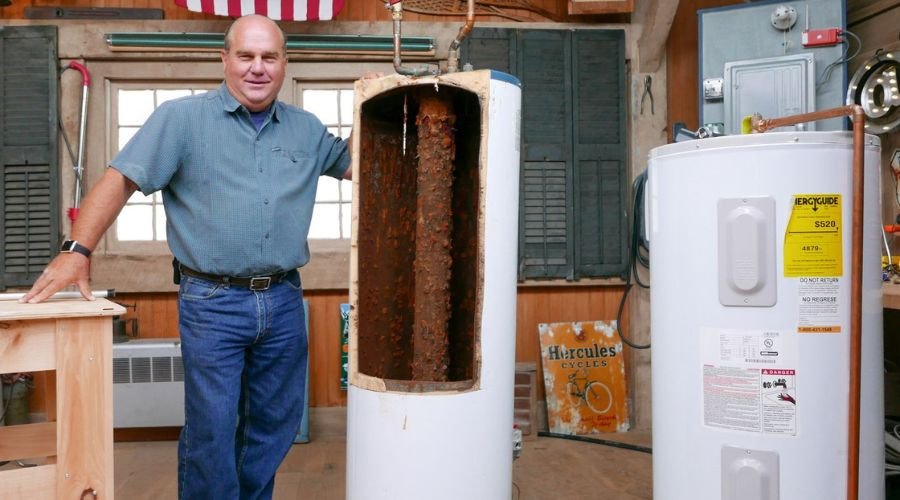
 One sure sign it’s time to break things off with the water heater is if the corrosion has taken hold in the hot water tank. Corrosion occurs when oxygen and minerals in the water interact with the metal of the tank wall, causing it to rust and deteriorate. Water heaters contain an anode rod inside the tank which attracts corrosive materials, keeping them from corroding the tank wall. However, this rod will eventually deplete, and if it’s not replaced in time, it cannot protect the tank from corrosion. Routine water heater maintenance helps prevent corrosion because the plumber will replace the anode rod if necessary and flush the minerals and sediment from the tank.
Signs of a corroded tank include visible rust on the tank, discolored water, and water leaking from it because corrosion weakens the material and can cause leaks. Unfortunately, corroded hot water tanks typically cannot be repaired, so if the tank is rusting, it’s best to replace the entire unit.
Hot Water Runs Out Faster Than Normal
A more obvious sign of a failing water heater is if there’s not as much hot water as there used to be, the water isn’t as hot, or there’s no hot water at all. This could be caused by various issues like a thermostat malfunction or a broken heating element. So if homeowners notice a lack of hot water or inconsistent temperatures, a water heater repair technician should be called to solve the problem.
However, if the unit is getting along in years (8+ years old), the cost of getting the right parts and replacing them may make water heater replacement a more economical option than repair in the long run. Another consideration is that the hot water may run out faster due to increased demand, a fairly common issue with growing families. In this case, the tank of the unit may be too small for the household, and replacing it with a larger model or a tankless water heater may make more sense.
Higher Energy Bills
If the energy bill is going up for no obvious reason, it may indicate that the water heater’s efficiency is diminishing. The water heater is responsible for around 20% of a home’s overall energy usage, so a loss in efficiency can significantly impact utility bills. Water heaters lose efficiency as they age due to normal wear and tear. However, aggressive spikes in energy usage may indicate serious malfunctions - especially if the higher bills coincide with any of the abovementioned issues.
If homeowners spot any of these signs, the best course of action is to call a reputable local plumber to inspect the water heater. Once they’ve diagnosed the issue, they can recommend solutions that best fit the budget and individual needs of the household. And if homeowners do decide to replace the water heater with a new, more energy-efficient model, it could be the start of a beautiful new relationship, saving them money on energy bills.
About Scott Plumbing
The award-winning Scott Plumbing is a local family-owned and operated business serving Huntsville, AL, and the surrounding areas. They offer same-day service, honest pricing, and a no-mess promise. Call them today for water heater services in Huntsville, AL.
)
)

 Leaks are one of the most common causes of low water pressure. Leaks can consume a large amount of water, reducing available water pressure. If leaks go undetected, water will continue to be lost, lowering the water pressure and possibly causing significant damage.
 If the decrease in water pressure is only coming from one fixture, like a faucet or showerhead, it might be because that one fixture is not working right. Check to see if the water flow from other fixtures in the home is normal. If it is, then the problem is probably with that one fixture.
)
)
)


)
)
)